Retro Faux Embroidery Easter Bunny PNG
First Impressions: A Nostalgic, Friendly Face That Feels Hand-Stitched
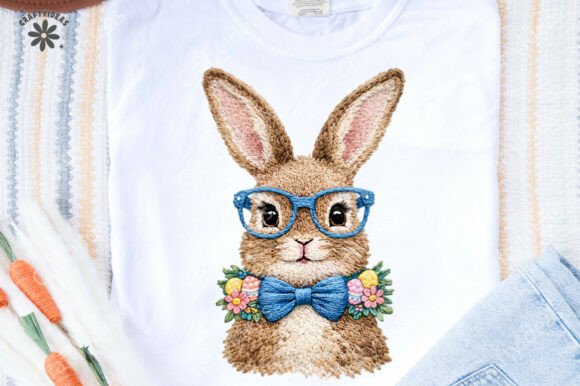
Opening Retro Faux Embroidery Easter Bunny PNG feels like flipping through a vintage craft catalog—soft curves, slightly uneven outlines, and that gentle, hand-drawn charm that says “made with care,” not “generated in five seconds.” It’s not hyper-realistic or overly detailed; instead, it leans into stylized simplicity: round ears with subtle inner curves, a relaxed smile, and a compact body that fits comfortably within a 3.5"–4" hoop. The faux embroidery effect is convincing—not photorealistic thread, but a smart, intentional illusion built with layered shading and stitch-like texture in the PNG itself. This isn’t just decoration—it’s a mood. It reads as warm, approachable, and quietly confident—perfect for spring collections, baby showers, boutique kitchen goods, or small-batch apparel.
Where It Shines: Real Projects That Feel Thoughtful, Not Trend-Chasing
Last week, I used Retro Faux Embroidery Easter Bunny PNG to develop a limited-run set of linen tea towels for a local gift shop. We stitched it onto natural undyed linen using soft pastel cotton threads—mint, buttercream, and pale rose—and paired it with a simple running-stitch border. The result? Customers paused. They touched the fabric. They asked, “Did you hand-stitch that?” That’s the power of this design: it bridges digital efficiency with handmade perception. It works especially well on structured, medium-weight fabrics like canvas tote bags, cotton aprons, and lightweight sweatshirts—surfaces where stitch definition holds and the retro shape reads clearly at arm’s length.
For Etsy sellers and craft fair vendors, this design fits naturally into curated bundles: pair it with coordinating egg motifs or floral sprigs for a cohesive spring collection. As a tote bag design, it sits beautifully centered above the pocket. On baby onesies or burp cloths, its rounded silhouette avoids sharp corners near delicate skin. And yes—it translates cleanly to embroidered patches when digitized thoughtfully, offering small shop owners a ready-made motif for iron-ons or sew-on accents.
Where to Pause: Fabric, Fit, and Functionality Matter
This isn’t a one-size-fits-all embroidery file. Its charm depends on context—and missteps show up fast. On thin, stretchy fabrics like jersey t-shirts or lightweight knits, the design’s soft edges can blur during stitching unless stabilized aggressively (cutaway + tear-away combo recommended). On dark fabric, avoid light thread without testing contrast first—the faux texture relies on tonal variation, not stark black-and-white separation. And on curved surfaces like caps or toddler beanies? Resize carefully. Drop below 2.75", and the bunny’s facial features risk becoming indistinct blobs under dense fill stitch.
Also note: while the PNG itself has no stitch data, your digitizer will need to interpret those gentle curves with intention. Avoid over-digitizing fine details—like the whisker lines or ear interior lines—as satin stitch runs. Let them breathe as subtle running stitches or open negative space. Too much density kills the retro ease this design promises.
Design Judgment Notes Every Embroidery Designer Should Run Through
- Test on scrap fabric first—especially if using textured weaves like burlap-blend tea towels or slubbed cotton.
- Review thread color contrast in both natural and artificial light—pastels pop on ivory, but fade on ecru; navy reads richly on cream but disappears on black without metallic or high-sheen thread.
- Confirm hoop size compatibility before digitizing—this design thrives between 3" and 4.5", not in tiny 2" hoops where charm becomes clutter.
- Inspect small details at actual stitch scale: the nose and eye highlights should remain legible, not merge into fill.
- Test in black-and-white mockups—if it loses personality without color, reconsider thread choices or background fabric.
- Compare performance on light vs. dark fabric backgrounds—the faux embroidery effect relies on value shifts, not just hue.
- Use proper stabilizer—medium-weight cutaway for stable wovens; fusible + tear-away for knits.
- Verify licensing before listing finished products or reselling digitized versions—Retro Faux Embroidery Easter Bunny PNG is a digital embroidery file asset, and commercial use rights vary by seller.
Why It Builds Trust—Not Just Traffic
In a market flooded with generic Easter clipart, this design stands out because it doesn’t try to be everything. It knows its lane: nostalgic, calm, tactile. When customers see it on a handmade pillow cover or personalized baby blanket, they don’t think “mass-produced SVG.” They think “someone chose this carefully.” That perception lifts perceived value, supports premium pricing, and reinforces brand consistency—especially for creative entrepreneurs building a recognizable seasonal aesthetic. For craft business owners, it’s a quiet differentiator: no loud slogans, no forced cuteness—just a rabbit that feels like it belongs in your world.
A Final Thought Before You Stitch
Retro Faux Embroidery Easter Bunny PNG isn’t flashy—but it’s reliable. It won’t dominate a busy festival booth, but it will earn repeat orders from customers who value subtlety, cohesion, and craftsmanship. Whether you’re prepping for Easter markets, launching a spring capsule collection, or designing custom gifts for loyal clients, treat it like a trusted sketch—not a shortcut. Digitize with restraint, stitch with intention, and let the retro warmth speak for itself. And if you’re selling it as part of a larger bundle or as a standalone t-shirt designs asset? Lead with that authenticity. Your buyers aren’t just buying a bunny—they’re buying the feeling of spring, handmade, done right.